
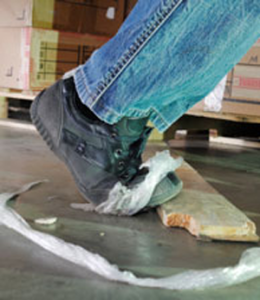
 Falls from slipping on surfaces or tripping on objects are leading causes of unintentional injuries in the United States. These injuries account for 15% of all accidental deaths and approximately 8.9 million visits to hospital ERs annually (https://www.osha.gov). Adults 55 and older are more often fall victims, and while resulting injuries can be minor in nature, they frequently result in serious injuries. Slipping and tripping falls are usually the leading cause of workplace injuries. People often view injuries from such falls as an inevitable aspect of work, and they commonly dismiss them as unpredictable and unpreventable. However, injuries from slipping and tripping — and the resulting workers’ compensation claims — cost member districts dearly in money and resources every year.
Most likely, you’ve all slipped, tripped, and fallen at some point in your lives. Some of you didn’t get hurt. Others ended up in the emergency room. Either way, most of these falls were probably preventable. Maybe you didn’t notice those concrete car stops in the parking lot, the curb in your path, the change in sidewalk elevation, that ice early one morning, or that box someone didn’t put back in its proper place. The bottom line is this: Paying attention to where you are walking can avoid potentially life-changing injuries. Prevention is the key. As Benjamin Franklin said, “An ounce of prevention is worth a pound of cure.”
Although falling and slipping injuries occur frequently, Cal/OSHA regulations mainly focus on the physical work area:
Permanent floors and platforms shall be free of dangerous projections or obstructions, maintained in good repair, and reasonably free of oil, grease, or water. Where the type of operation necessitates working on slippery floors, such surfaces shall be protected against slipping by using mats, grates, cleats, or other methods which provide equivalent protection.
Under Cal/OSHA, if employers address these workplace hazard types and provide some degree of training, it is up to employees to report any newly discovered hazards that may result in slipping, tripping, and possible falls.
Statistics in Schools
A California Joint Powers Authority (JPA) School District reported that slips, trips, and fall claims were on average 25% of all claims and 28% of all claim costs. Nearly all of these accidents could have been prevented.
Employees slipped, tripped, and fell over the following: 34% - Objects (chair, sprinkler, lift gate, backpack, milk crate, floor mat, students)
14% - Uneven Surfaces
14% - Stairs
13% - Wet Surfaces
11% - Curb/Sidewalk Edge
5% - Holes
Physical Hazards
Slips
- Poorly maintained stairs: loose or slick treads, poor design, absence of handrails
- Slippery finishes on floors
- Wet or dirty walkways
- Weather-related hazards such as ice, rain, or snow
Trips
- Wrinkled carpet or curled mat edges
- Obstructions and clutter
- Poor lighting or visibility
- Cracked or uneven walkways
- Unlaced shoes
- Long pant legs
- Transition area from room to room
- Materials stored on stairways
- Obstacles in walkways: electrical cords, boxes and other materials
- Holes or raised surfaces
- Damaged or poorly maintained surfaces
- Improper, worn or dirty footwear
- An interruption during task performance that causes your to trip
Behaviors that lead to falls
Physical workplace hazards are the most obvious causes of slips, trips, and falls. However, even when no obvious hazard exists, certain kinds of behavior can result in a fall where you sustain injuries. Such Injuries can result from: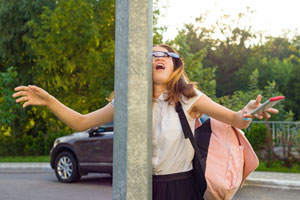
- Walking too fast or running
- Quickly changing direction
- Not paying attention while walking or running
- Wearing improper, worn, or dirty footwear
- Not looking ahead at the travel path
- Ignoring hazards or spills on walkways
- Carrying material that blocks your view
- Failing to use handrails
- Wearing incorrect or poorly fitting footwear.
- Taking shortcuts across lawns, planter boxes or other unimproved surfaces
- Jumping to a lower level
- Distractions
More About Distractions and Inattention to Surroundings
Distractions and inattention to your surroundings can lead you to make minor errors or sustain disabling injuries while performing work tasks. Here are some examples:
- A food service worker, carrying trays while talking to other coworkers, tripped over his own feet
- A teacher was walking on a sidewalk after school while talking to the students and did not see that the edge of the sidewalk ended, stepped off, and rolled her ankle
- A warehouse worker did not see the parking curb and tripped over it and fell to the asphalt
- A teacher walking to a student in the classroom did not see the "no trip strip" cord protector and stepped on it and tripped and fell to the floor
- A librarian forgot the book cart was directly behind him and backed up and fell over the cart, then to the floor
- Distractions by strong emotions like frustration and stress cause distraction and inattention to surroundings
Injury Prevention
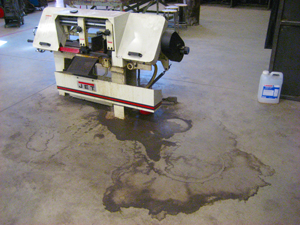 To prevent slips, trips and falls at the workplace, be vigilant about looking out for hazards. For example, wiping up spills, sweeping up sand and dirt, or picking up items blocking aisles can help prevent someone else from having a bad fall. Be aware of changes in walking surface elevations. Suggest to management that someone mark walking surface edges with brightly colored paint. Other actions that can help prevent falls are:
- Practice Good Housekeeping
- Contain and properly clean up spills when discovered
- Use fans to shorten drying time
- Ensure proper floor maintenance
- Remove obstacles from walkways
- Close file cabinet drawers
- Secure rugs, mats, or carpets that are not flat
- Keep the work environment clean and orderly
- Use warning signs to alert others of a hazard. Warning signs should be:
- Visible from 360°
- Tall enough to catch a person's attention
- Bright yellow
- Train employees to:
- Understand the true danger of falls
- Understand the behaviors that lead to falls
- Know how to prevent slips and trips
- Know how to properly clean up spills
- Know the corrective actions necessary to prevent workplace slips and trips
- Conduct periodic inspections and report the existing hazards to the proper person for correction:
- Inspect the workplace for hazards to help reduce slips, trips and falls. Use a checklist to identify areas or conditions that are potential hazards and enable you to document your findings.
- Change or modify flooring to prevent accidents:
- Coat floors with slip-resistant materials
- Replace old floors
- Apply abrasive coatings
- Apply pressure-sensitive abrasive strips
- Use slip-resistant floor mats in entryways and kitchen areas
- Ensure proper visibility in dimly lit areas:
- Use available light sources to provide adequate lighting for the task or utilize other light sources
- Open window shades when possible
- Use temporary lighting in areas with no available lighting
- Make behavioral changes:
- Move carefully
- Adjust your stride to a pace that is suitable for the task at hand
- Stay on designated pathways
- Pay close attention to surfaces
- Avoid rushing
- Keep pathways clear
- Use handrails
- Identify and report workplace hazards
- Make wide turns at corners
- Keep shoes clean
- Carry smaller loads or use a cart to transport the load
- Exercise regularly to help maintain strength, flexibility and balance
- Avoid awkward body positions
- Avoid jumping to lower levels, and never jump from docks, trucks, and platforms
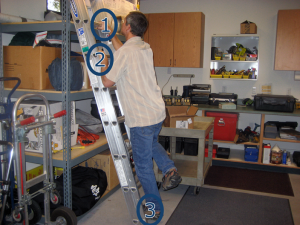
- Use the 3-Points of Contact rule (2 hands and 1 foot or 2 feet and 1 hand) when ascending or descending a ladder
- Use Proper Footwear:
- Slip-resistant and unique to the given floor surface
- Properly fitted
- Flat, even heel
- Flat, flexible bottom
- Raised tread pattern
- Made up of low density (soft) material
Proper Shoe Selection
Improper footwear accounts for roughly 24-30% of slip, trip, and fall accidents. When you add uneven surfaces, poor lighting conditions, and spilled liquids to the equation, you have the perfect conditions for slip, trip, and fall injuries. That’s why selecting proper footwear for the job and its environmental conditions is essential. Here are some key considerations for selecting proper footwear:
Slip-resistant soles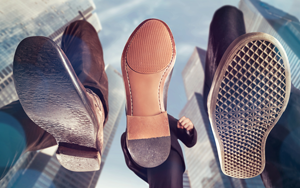
Select slip-resistant soles that protect against sharp objects, hot and cold surfaces, and provide a secure grip on the walking surface. The sole’s gripping power depends on its tread pattern, design, and the materials it is made from. Soft materials grip the surface better than hard materials. Some soles utilize a design known as “siping” to provide extra traction on wet surfaces. Others impregnate the sole with specialized chemicals, compounds, or materials that provide additional slip resistance.
Stable heels that wrap the foot
Select a stable heel that wraps your foot well because the heel provides balance and stability to the foot. Take into consideration the width, length and heel cup, which is where the heel of your foot contacts the shoe.
The heel cup holds the foot in place and ensures that the shoe moves with the foot. A loose or shallow heel cup allows for too much movement and can result in a loss of balance or even a turned ankle.
Solid support around the ankle and foot
This concerns the third shoe component — the upper — which is the shoe piece that attaches to the sole and provides support around your foot. The taller the upper, the more ankle and foot support as a whole. This support can prevent twisting and balance issues. Shoes with little or no ankle support, such as sandals and some dress shoes, should only be worn in appropriate settings.
Minimal weight
At the end of the day when you are tired and don’t have the energy to move with the same bounce in your step, shoe weight is important. Dragging your feet or using less lift with each step can result in your toe contacting raised portions of the walkway and making you trip forward. If you are on your feet most of the day, a lighter shoe can help prevent leg fatigue and therefore foot drag.
Remember, selecting the right shoe for the job is your first line of defense against slips, trips, and falls.
Equipment
When most people fall, it is to the ground or foot level. Even though the fall may be only a few feet, resulting injuries can be severe. However, more dangerous falls occur from equipment or high, above-ground work areas. These falls cover much greater distances and can result in more severe, disabling injuries. Thus, whenever you climb onto equipment or work at heights, take extra safety precautions. Never perform work involving heights without the necessary and required safety equipment, PPE, and training.
When using stairs, you should:
- Be sure that the stairwell is well lit.
- Never run when going up or downstairs.
- Check to see that stair treads are in good shape, with no obstructions on the steps.
- Always use the handrail when going up or downstairs.
- Avoid carrying large loads when going up or downstairs
When using ladders, you should: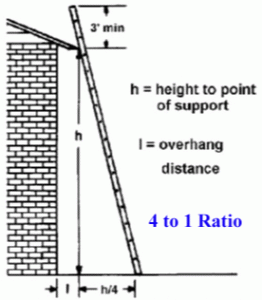
- Never use broken or defective ladders.
- Set the angle of the ladder at the proper 4-1 ratio.
- Make sure the ladder is on solid footing and does not move before you climb on it.
- Tie your ladder to the adjacent structure to improve stability.
- Anchor the bottom of the ladder to the adjacent structure.
- Never stand on the top two steps of a stepladder.
- Extend straight ladders three feet beyond the edge of the roof.
- Keep your body inside the rails of the ladder and never reach too far past the ladder rail.
When working on rooftops, you should: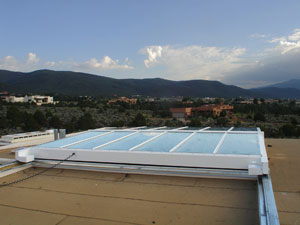
- Stay at least six feet away from roof openings, holes, hatches, skylights, and unprotected edges.
Balance and Center of Gravity
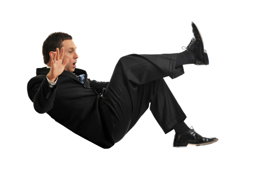 Every object has a center of gravity and humans are no different. As you sit, stand, and move forward, left or right, your center of gravity moves and adjusts with you to prevent a fall. When your center of gravity shifts or moves too far forward/backward or left/right, you lose your balance and either fall to a lower level, or — if you respond quickly enough — prevent yourself from falling. Slipping on a wet floor or tripping on an object in your path will throw you off balance and may cause you to fall and suffer an injury.
Balance means “an even distribution of weight enabling someone or something to remain upright and steady.” If you want to prevent slips, trips and falls, you need to work on your balance. Increasing your ability to maintain balance is the key component in preventing serious injuries. You can achieve balance with the equipment you use by training your body to maintain good, balanced posture.
Equipment-based fall prevention
Fall prevention strategies include:
- Using a ladder instead of a chair
- Wearing slip-resistant shoes
- Clearing ice from pathways
- Proper management of cords and cables
- Tying shoes
- Making sure pants and skirts don’t interfere with shoes
- Using bags to transport bulky items
- Not talking on the phone while walking
Balance Training
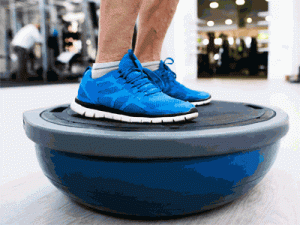 Equipment-based strategies are important, but training your body to increase balance strength is more effective at preventing slips, trips and falls. As you age, your balance starts to wane because you spend more time sitting in office chairs and vehicle seats and less time challenging your balance muscles. When you don’t spend time hiking, running, or playing on uneven surfaces, your body stops using the muscles that help you negotiate these displacements. If you want to keep yourself upright and avoid falling, try these balance-improvement exercises:
- Stand on one leg/foot
- Walk heel to toe
- Stand on balance ball
- Use stability ball for a basic squat
- Balance on a wobble board
- Take a Tai Chi class
- Take a yoga course
- Swing on swing sets
Start slowly with these exercises, using a handrail or chair to help keep your balance. As you improve your balance, you can start to do these exercises without the aid of a stability device. Remember, balance starts with you — whether that is strengthening your body or making good equipment choices.
Avoid Losing Balance
To avoid losing your balance and falling, you should always:
- Pay continuous attention to the pathway
- Scan ahead for potential slip and trip hazards
- Slow down and adjust your stride in dim light or when walking across slick or rough surfaces
